Beaverton and Washington County
Countertop Replacement in Beaverton, OR
Tell us about your counters and a local contractor will follow up.
The countertop is the last big piece to be measured
Countertop replacement in Beaverton, OR, can be a project on its own or one step in a larger kitchen remodel. Either way, the counter is measured to the cabinets it sits on, so it comes late in the order of work. The material you choose decides how it is measured, how many seams it has, how the sink is mounted and how much care it needs afterward.
This page compares the common materials and explains templating, seams, cutouts and the backsplash. We are a referral service for Beaverton and the rest of Washington County. Send a request and we pass it to an independent local contractor, who looks at your kitchen, talks through materials and gives you the estimate.
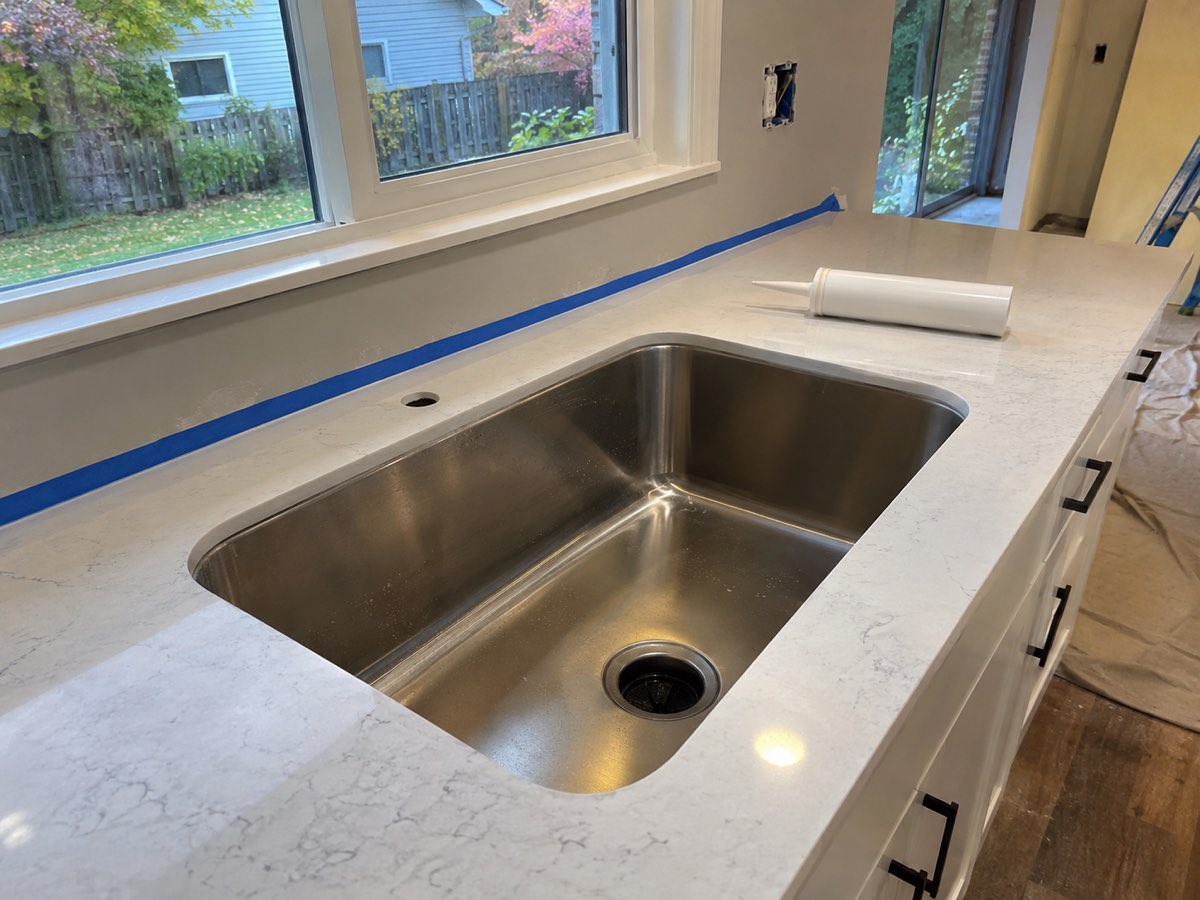
What goes into a countertop replacement
Five things shape a countertop job: the material, the templating step that sets the exact size, where seams fall, how the sink and cooktop openings are handled, and how the new counter meets the backsplash and walls.
Choosing a material
Quartz is an engineered stone with consistent color, and it does not need sealing, though it can be marked by direct heat. Granite is natural stone, so every slab is different, and many granites benefit from periodic sealing. Solid surface is a uniform material that can have nearly invisible seams and an integrated sink, and light scratches can often be buffed out.
Laminate is a thin decorative layer over a core, available in many patterns, and is easy on cabinets because it is light. Butcher block is wood, warm to the touch and repairable by sanding, but it needs oiling and care around the sink. Choose for how you cook as much as how it looks.
Templating after the cabinets are set
Stone and quartz counters are made from a template, a precise pattern of the cabinet tops and walls. Templating happens only after the cabinets are installed, level and fastened, because any change after that can make the finished counter fit badly. If cabinets are being replaced, the counter waits for them.
At templating, the fabricator also needs the sink, faucet and cooktop on hand or their exact specifications, so the cutouts are right. Be present or reachable that day to confirm overhangs, edge profile and seam locations. Fabrication follows, and the kitchen is often without a working sink until installation, so plan for that gap.
Seams and slab layout
Slabs come in limited sizes, so long runs and L-shaped counters often need seams. A good layout puts seams where they are least noticeable and away from weak points, such as the narrow strip in front of a sink or behind a cooktop. With patterned granite or veined quartz, the fabricator also decides how the pattern flows across the seam.
Ask where the seams will be before fabrication and whether you can see the slab layout. Solid surface can be joined with very discreet seams, while laminate and butcher block have their own joining methods. Islands are often cut from a single piece when the slab is large enough.
Sink and cooktop cutouts
An undermount sink hangs below the counter, so the counter edge around it is exposed and polished. It needs a solid-surface or stone counter and support from the cabinet below. A drop-in sink sits on top with a rim, works with any material including laminate, and is simpler to replace later. Farmhouse sinks need a cabinet built or modified for them.
Cooktop cutouts are cut to the manufacturer's dimensions, and some stone cutouts are reinforced. Faucet holes, soap dispensers and filtered water taps are drilled during fabrication, so decide how many holes you need and where before templating. Adding a hole later is possible but harder.
Backsplash and wall tie-in
Where the counter meets the wall, there has to be a plan. Some homeowners choose a short backsplash cut from the same material as the counter. Others run tile from the counter up to the upper cabinets or the ceiling. Either way, the joint between counter and wall is sealed so water cannot get behind.
Removing an old counter often damages the wall above it, especially if the old backsplash was glued on. Expect some drywall repair. If you plan a tile backsplash, it is installed after the new counter is in. Outlets along the backsplash may need box extenders so the cover plates sit flush with the new surface.
Why Request Countertop Replacement Through Us
Material advice for your kitchen
The right counter depends on how you cook and clean. The contractor we refer you to talks it through after seeing your kitchen.
A contractor who works locally
Your request goes to an independent contractor serving Beaverton and nearby Washington County communities who coordinates templating and installation.
You stay in charge
We pass along your request and step back. Material, layout, the estimate and any agreement are settled between you and the contractor.
How a countertop replacement runs
- Choose the materialYou compare samples and slabs with the contractor and settle on material, color, edge profile and sink type.
- Confirm cabinets and fixturesThe cabinets are checked for level and support, and the sink, faucet and cooktop specifications are gathered for the cutouts.
- Template the countersAn exact template of the cabinet tops and walls is made, and seams, overhangs and cutouts are agreed.
- Remove and installThe old counter is removed, the new pieces are set, seams are joined and the sink is mounted.
- Reconnect and sealThe plumbing and cooktop are reconnected, wall joints are sealed, and the backsplash follows if one is planned.
Countertop Replacement Questions
Can new countertops go on my existing cabinets?
Often yes, if the cabinets are level, solid and in good condition. Heavy stone needs firm support, so the contractor checks the cabinet tops and the sink base. Cabinets that are out of level or weak may need work first.
Will I lose my sink during countertop replacement?
Usually for a short stretch. The sink is disconnected when the old counter comes off and reconnected once the new one is installed. With stone and quartz there is often a gap between templating and installation that you should plan around.
Which countertop material needs the least upkeep?
Quartz and solid surface need no sealing and clean with mild soap. Granite may need periodic sealing depending on the stone. Butcher block needs regular oiling. Laminate needs little care but does not tolerate hot pans or cutting directly on it.
Do I need a new backsplash with new countertops?
Not always, but it is common. Removing the old counter can damage the wall or old tile above it, and a new counter may not line up with the existing backsplash. The contractor can tell you once the old counter is assessed.
Other Services in Beaverton, OR
- Kitchen Remodel
- Cabinet Replacement
- Cabinet Refacing
- Kitchen Island Installation
- Kitchen Layout Redesign
- Kitchen Remodel in Beaverton, OR
Towns We Take Requests From
Call for a Free Estimate
Tell us which counters you want replaced and the material you are considering. We will pass your request to an independent local contractor.